
When Repair Isn’t Enough
This Maple Valley deck replacement project involved more than replacing old decking boards. The existing structure showed signs of long-term moisture exposure, aging framing, unstable stairs, and structural wear that could no longer be solved with surface-level repairs alone.
Many homeowners first notice problems like soft spots, loose railings, uneven sections, or recurring repairs. In this case, once the structure was evaluated more closely, it became clear the framing and support system required full replacement for long-term safety and performance.
The goal was not simply to improve appearance — it was to rebuild the structure correctly so the deck would perform reliably in Western Washington weather conditions.
What We Found During the Structural Evaluation
At first glance, parts of the existing deck still appeared usable. However, the underlying structure revealed several issues commonly found in older elevated decks throughout Maple Valley:
Moisture-damaged framing components
Aging support structure with reduced stability
Stair sections no longer performing safely
Uneven deck surfaces caused by structural movement
Long-term wear from drainage and limited airflow
This type of deterioration is common on older decks throughout the Maple Valley area where moisture exposure, shaded yards, and drainage conditions gradually affect structural framing over time. Learn more about our Deck Builder in Maple Valley services
Why Elevated Decks Fail Faster in Shaded Maple Valley Yards
Many elevated decks throughout Maple Valley experience faster structural deterioration due to moisture exposure, shaded conditions, and limited airflow beneath the structure.
Homes surrounded by trees or built on larger wooded lots often receive less direct sunlight, which slows drying after rain and increases long-term moisture retention around framing components.
Several conditions commonly contribute to accelerated deck deterioration in the area:
• Limited airflow beneath elevated deck structures
• Moss growth trapping moisture against walking surfaces and framing
• Drainage patterns that allow water to collect near support areas
• Continuous framing exposure underneath elevated decks
• West-facing weather exposure during heavy rain seasons
• Long-term moisture saturation affecting joists, beams, and stair framing
Over time, these conditions can begin impacting structural performance long before major surface damage becomes visible from above.
In many older Maple Valley decks, framing deterioration develops gradually beneath the deck boards where trapped moisture and limited ventilation continue affecting the structure year after year.
Proper drainage planning, airflow management, flashing details, and structural framing corrections are often critical during full deck replacement projects in moisture-prone environments like Maple Valley.
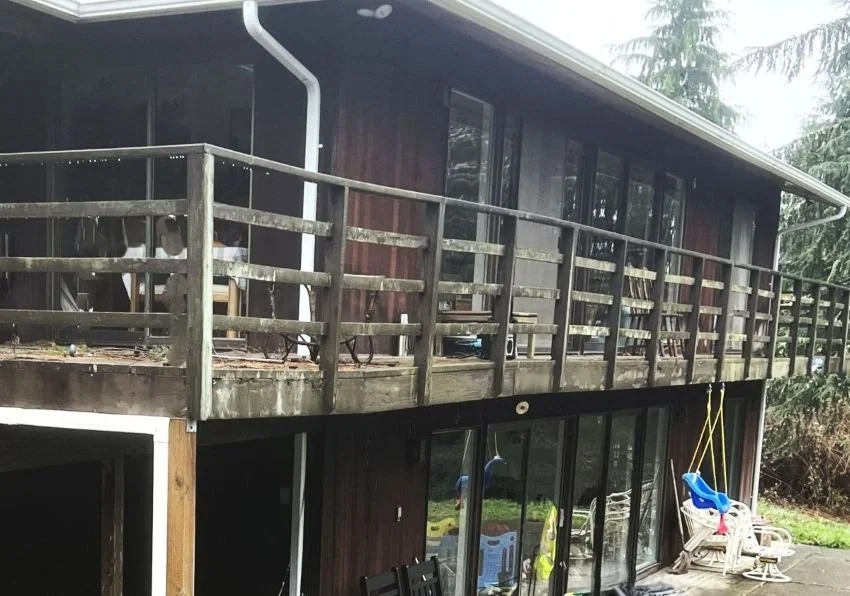
Aging elevated wood deck in Maple Valley showing worn boards and structural deterioration before full deck replacement
Signs Structural Damage Exists Below Deck Boards
Surface boards do not always reveal the full condition of an aging deck structure. In many cases, deeper framing problems develop beneath the walking surface long before homeowners notice major visible damage.
Common warning signs may include:
• Movement or shifting near stair connections
• Soft or weakened joist sections beneath decking
• Corrosion around fasteners, brackets, or hardware connections
• Separation near the ledger connection at the home
• Repeated repairs in the same problem areas
• Uneven or unstable walking surfaces
• Stair movement or railing instability
• Moisture deterioration around support posts and framing intersections
When structural components begin failing, replacing surface boards alone often will not solve the underlying issue.
During structural deck evaluations, framing conditions, moisture exposure, drainage flow, stair stability, and connection integrity all need to be assessed together to determine whether repair, renovation, or full replacement is the safer long-term solution.
Why Full Deck Replacement Made More Sense
Instead of continuing to patch isolated problem areas, the structure was rebuilt to create a safer and more reliable long-term solution.
The replacement included:
Rebuilt structural framing
Improved support and load distribution
Safer stair layout and transitions
Updated railing system
Improved long-term moisture resistance
Better everyday usability and circulation
By rebuilding the deck properly from the framing up, the homeowners avoided ongoing repair cycles while significantly improving safety and performance.
In projects like this, full Deck Construction & Replacement becomes the better long-term investment compared to repeated repairs.
The Result
The finished deck now provides a stable, functional outdoor space with improved structural reliability, updated safety features, and a cleaner overall layout.
More importantly, the new structure eliminates the underlying issues that were causing recurring deterioration and ongoing maintenance concerns.
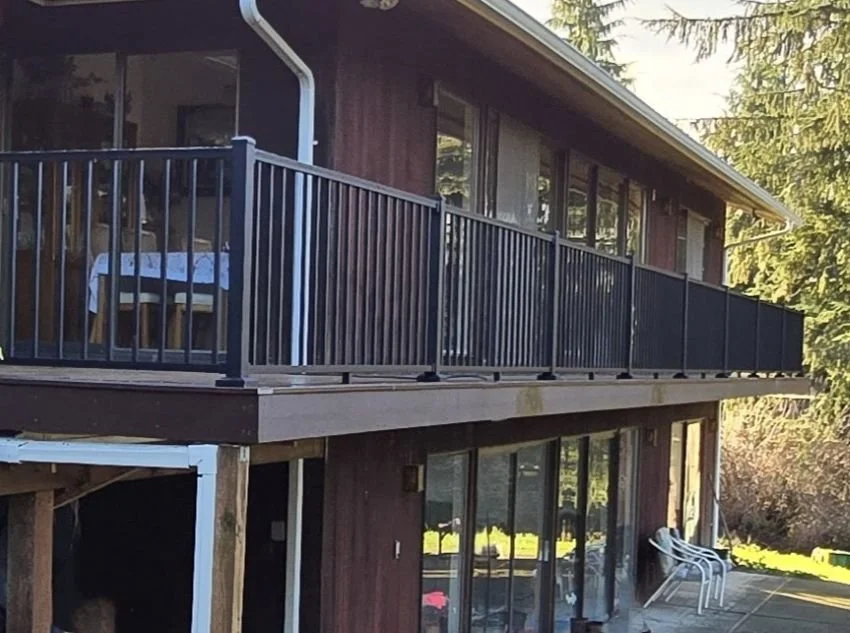
Newly rebuilt elevated deck in Maple Valley with updated framing and black railing system after full deck replacement
When Should You Replace a Deck Instead of Repairing It?
You should consider full replacement when:
The framing or support structure is compromised
The deck feels soft, bouncy, or uneven
Repairs are needed repeatedly in the same areas
Moisture damage has spread beyond surface boards
If structural components are failing, repairs won’t solve the root problem.
Why Moisture Damage Is Common on Maple Valley Decks
Many decks throughout Maple Valley experience heavy moisture exposure due to shaded yards, limited airflow, moss growth, and long wet seasons.
Over time, trapped moisture can begin affecting framing connections, stair structures, and support components long before major surface damage becomes visible.
Common warning signs include:
Soft or unstable deck sections
Movement in stairs or railings
Uneven walking surfaces
Repeated repairs in the same areas
Visible moisture deterioration around framing
Without proper drainage planning, ventilation, and structural reinforcement, moisture-related deterioration can continue spreading beneath the surface.
This project focused not only on replacing worn decking materials, but also correcting the structural issues contributing to long-term deck failure.
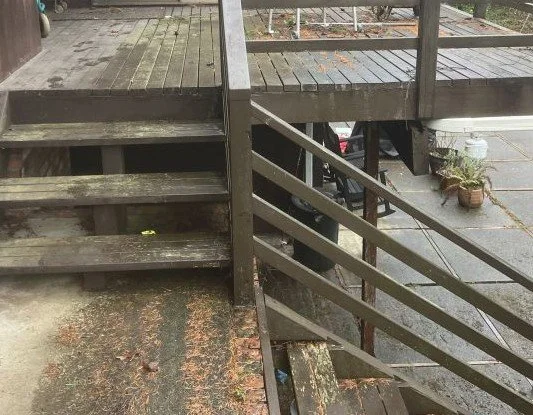
Existing deck stairs and framing showing moisture exposure and long-term wear prior to full structural replacement in Maple Valley, WA.
What This Means for Maple Valley Homeowners
If your deck:
Feels soft or unstable
Shows recurring problem areas
Requires frequent repairs
Has aging framing or stair movement
Experiences ongoing moisture issues
…the problem may extend deeper than the surface materials alone.
Understanding the condition of the framing and support structure is often the most important step before deciding between repair, renovation, or full replacement.
Related Deck Resources
Thinking About Your Deck?
Understanding the condition of the structure—not just the boards—makes all the difference.
If you’re dealing with ongoing deck issues in Maple Valley, it may be time to look deeper before investing in another repair.