
Composite Decking Explained
Composite decking is a manufactured decking material made from a blend of wood fibers and synthetic polymers. It is designed to offer the appearance and feel of wood while reducing many of the maintenance demands associated with traditional lumber.
What Is Composite Decking?
Composite decking combines organic wood content with plastic binders to create boards that balance durability, appearance, and consistency. Unlike natural wood, composite boards are engineered to resist many common outdoor issues while retaining a more wood-like surface texture.
Because composite contains both organic and synthetic components, its performance characteristics sit between natural lumber and fully synthetic materials like PVC.
Key Characteristics and Performance Traits
Wood-like appearance
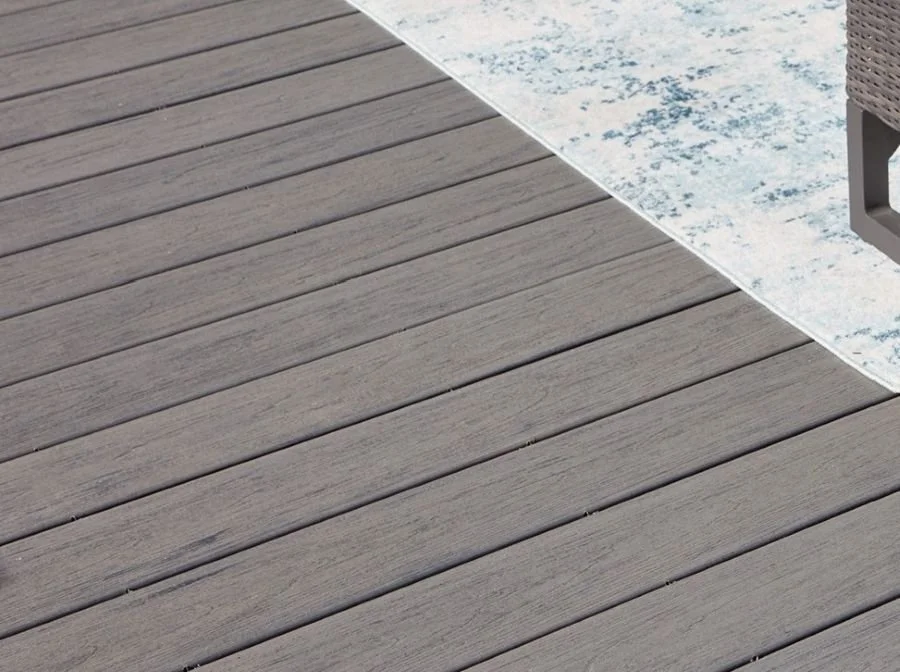
Composite decking is often chosen for its texture and visual depth, which provides a wood-like visual texture than fully synthetic materials.
Improved dimensional stability
Compared to traditional lumber, composite boards are less prone to splitting, checking, and surface cracking when exposed to changing weather conditions.
Moderate moisture resistance
Composite resists moisture better than wood, though it does not behave the same way as fully synthetic materials. Drainage, ventilation, and surface exposure still matter to long-term performance.
Consistent manufacturing
Boards are produced to uniform profiles and sizes, which supports predictable spacing and alignment during deck planning.
Reduced maintenance compared to wood
Composite decking typically does not require staining or sealing, though periodic cleaning is still part of normal care.
Where Composite Decking Performs Best
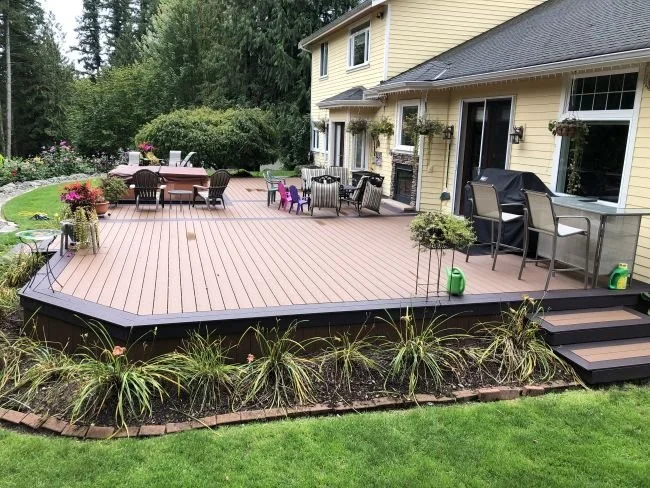
Composite decking performs well in visible outdoor living areas where surface durability and consistent appearance matter. It is commonly used in deck construction projects that experience regular foot traffic, furniture use, and exposure to changing weather conditions.
Because composite balances organic and synthetic components, its performance characteristics differ from both natural wood and fully synthetic materials.
When Homeowners Consider Alternatives
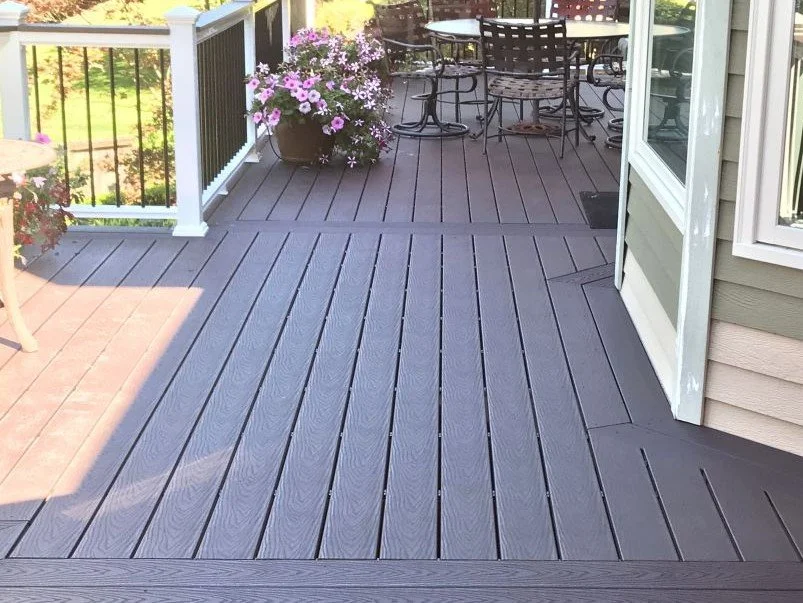
Composite decking differs from other materials in composition, appearance, and maintenance profile. In environments with persistent moisture, fully synthetic materials may behave differently. In other settings, natural wood products offer a distinct look and aging pattern.
Reviewing material differences side by side helps clarify trade-offs without assuming one option is universally better.
You can also view completed projects in our portfolio to see how different decking materials appear in real-world installations.
Maintenance Considerations
Composite decking reduces the need for surface treatments but still benefits from routine cleaning. Organic content means debris, pollen, and moisture can affect surface appearance if ignored over time.
Maintenance is generally predictable and periodic rather than seasonal or restorative.
If you’re comparing composite with other decking materials and want clarity on how each option fits your goals, a consultation can help review differences.