
Many homeowners believe an aging deck always requires a complete replacement, but that's not necessarily the case. When the structural framing remains in good condition, replacing worn decking, updating railings, rebuilding stairs, and adding modern features can dramatically improve the appearance, safety, and functionality of an outdoor living space.
This project demonstrates how carefully planned deck upgrades transformed an aging deck into a beautiful, low-maintenance outdoor space while preserving structurally sound components and avoiding the cost of a complete rebuild.
When Deck Upgrade Is a Better Option Than Full Replacement
Many homeowners assume older decks automatically require full replacement.
In reality, some structures still have usable framing systems even when the visible surfaces are worn, outdated, or no longer safe.
In this project, the original deck had:
Aging decking boards
Outdated railing systems
Poor stair usability
Limited outdoor functionality
Surface wear from long-term weather exposure
After evaluating the structure, portions of the framing were determined to still be structurally sound and suitable for deck modernization.
That allowed the project to focus on upgrading the deck without unnecessary rebuilding.
Before and After: Deck Upgrade Project
The deck improvement transformed the outdoor space from an aging deck into a safer, more functional area designed for long-term performance.
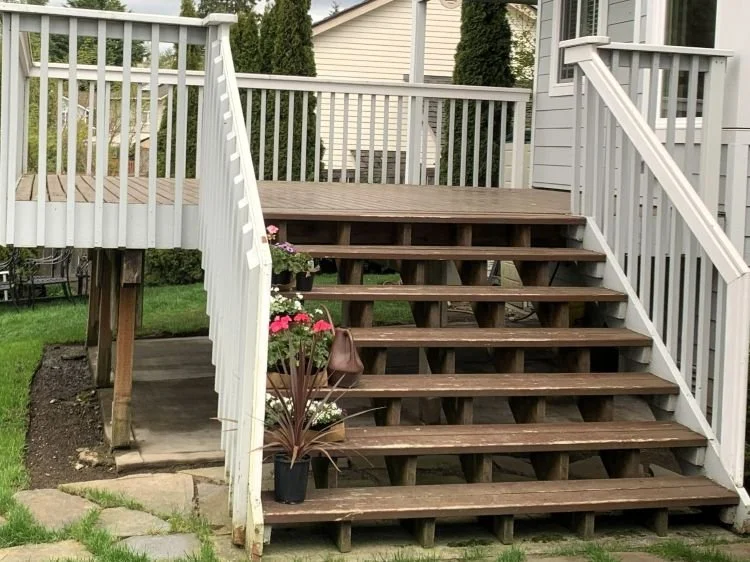
Aging backyard deck in Maple Valley, WA before upgrade with worn stairs, outdated railings, and original wood framing.
The Deck Upgrade work included:
New low-maintenance decking materials
Updated black railing systems
Rebuilt stairs with improved access
Integrated stair lighting
Improved circulation and usability
Better moisture resistance and drainage planning
The goal was not simply cosmetic improvement.
The project focused on improving how the deck performs day to day while preserving structural components that remained reliable.
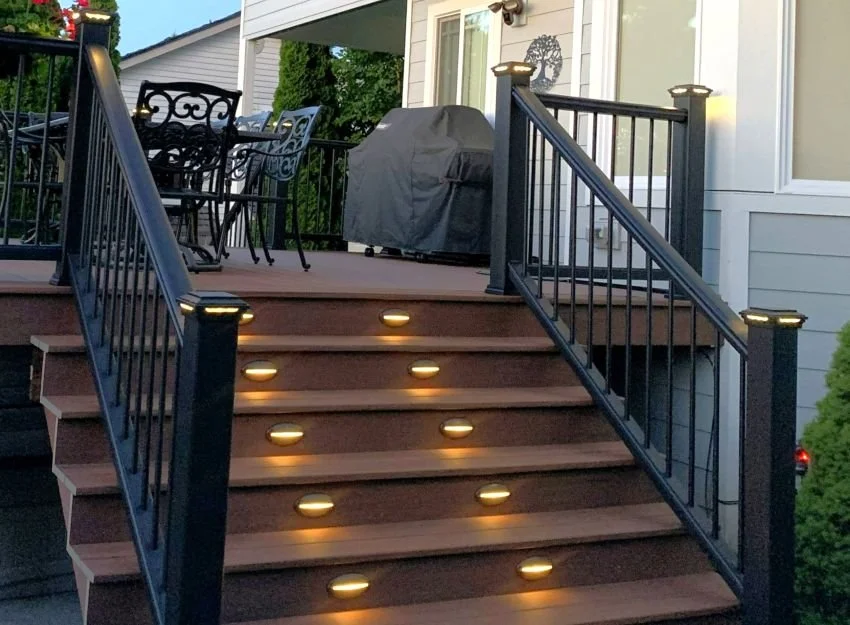
Upgrade PVC deck in Maple Valley, WA with upgraded black railings, rebuilt stairs, integrated stair lighting, and improved outdoor usability.
What We Evaluate Before Recommending Deck Improvement
Before recommending upgrade instead of replacement, we evaluate whether the existing structure can continue performing safely over time.
That includes reviewing:
Framing condition
Moisture exposure
Structural support points
Stair stability
Drainage conditions
Deck-to-home connections
Post and beam integrity
Overall long-term performance potential
If the primary framing remains stable, deck improvements may provide a better solution than complete reconstruction.
If major structural failure is present, full replacement is usually the safer long-term approach.
When Is a Deck Upgrade the Right Choice?
A deck upgrade may be the right solution when:
The structural framing is in good condition.
Footings and support posts remain stable.
Only the decking, stairs, railings, or other surface components have reached the end of their service life.
Homeowners want to improve appearance and reduce maintenance without rebuilding the entire deck.
Every project begins with a structural evaluation to determine whether targeted upgrades or complete deck replacement will provide the safest long-term solution.
When Full Deck Replacement Becomes Necessary
Not every deck can be upgraded safely.
Full replacement may be the better option when:
Structural framing has severe moisture damage
Support systems are compromised
Previous repairs continue failing
Footings or posts are unstable
The structure no longer meets safety requirements
Large portions of the framing require rebuilding
When structural framing can no longer be preserved, full deck reconstruction becomes the more reliable long-term investment.
Related Deck Upgrade Services
Planning a Decking replacement or Deck Upgrade Project?
If your existing deck may still have structurally sound framing underneath, deck upgrade may improve the space without requiring full replacement.
Petra Decks evaluates existing structures for safety, usability, layout improvements, and long-term performance before recommending the right approach.