
Deck Railing Materials Explained
Deck railing materials influence how a deck looks, how open or enclosed it feels, and how much upkeep is required over time. While railing systems are often discussed as a single component, the material choice plays a major role in visibility, maintenance expectations, and long-term appearance.
This page explains common deck railing material categories and the trade-offs homeowners typically consider when comparing options.
Deck Railing Material Categories
The following sections outline common railing material categories and their general characteristics.
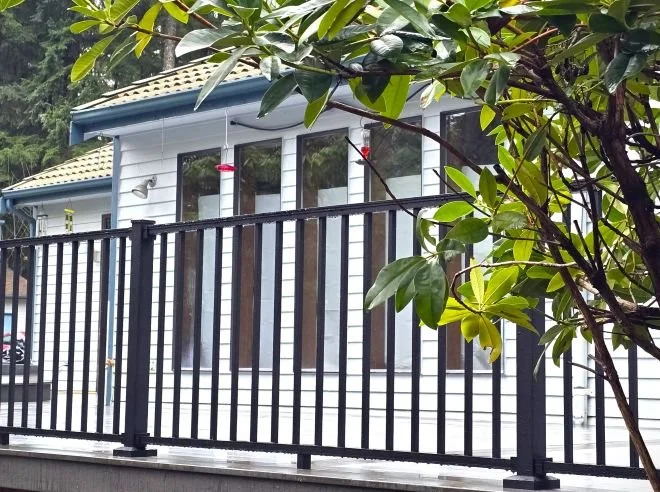
Metal Railing Materials
Metal railing materials are known for strength, slim profiles, and visual openness. Depending on finish and design, they can feel modern, minimal, or industrial.
Key characteristics
Narrow components that preserve views
High durability with minimal flex
Surface finishes designed to resist corrosion
Metal railing materials are commonly used where open views are maintained or where a lighter visual footprint is preferred.
PVC Railing Materials
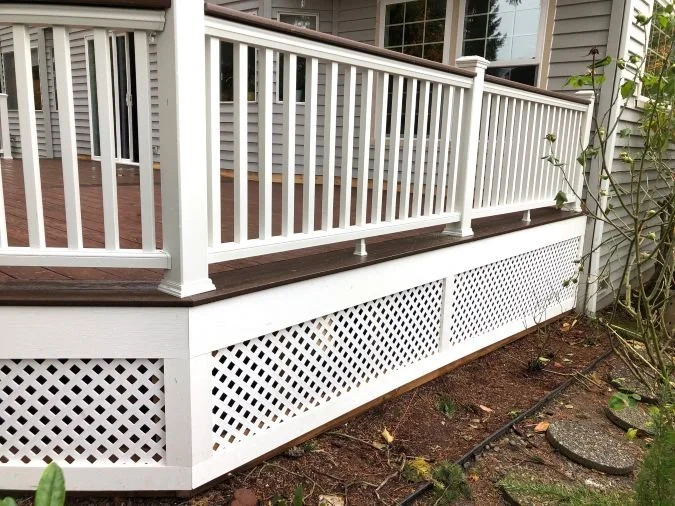
PVC railing materials are fully synthetic and known for moisture resistance and color stability. They are often used in environments where exposure to weather is consistent.
Key characteristics
No organic material
Resistance to rot and moisture absorption
Uniform appearance
PVC railings are typically considered alongside PVC decking, though the materials are evaluated independently.
Composite Railing Materials
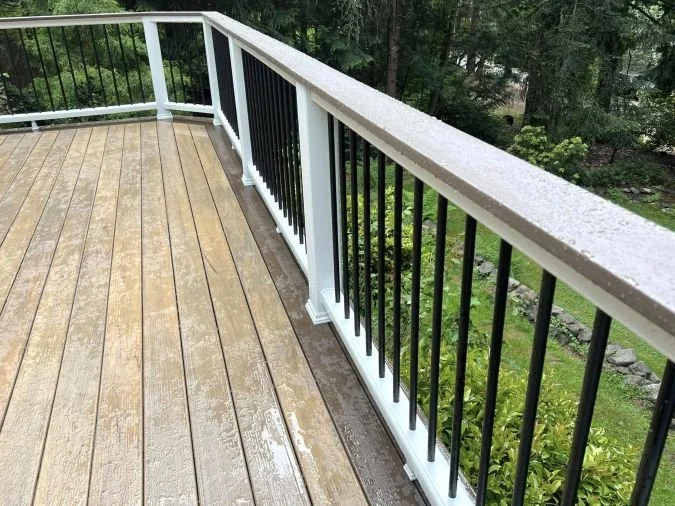
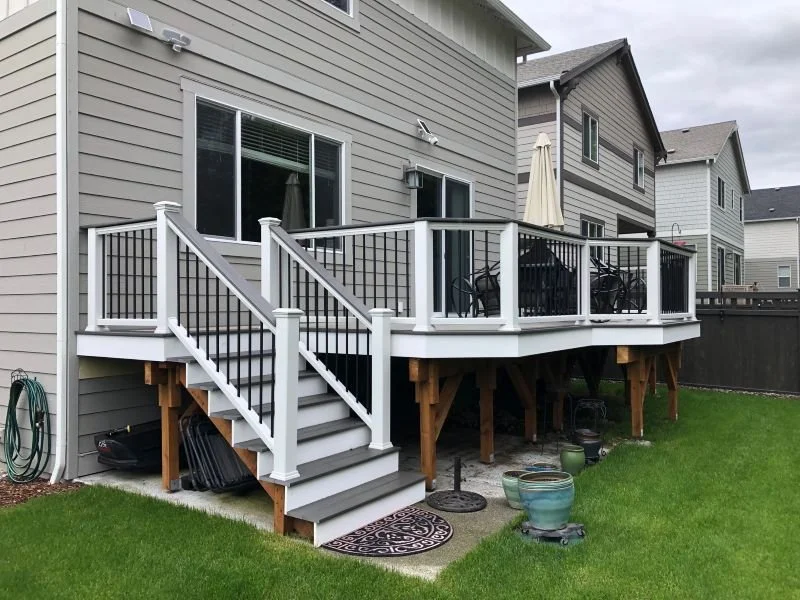
Composite railing materials are designed to coordinate visually with composite decking. They often feature broader profiles and solid infill components.
Key characteristics
Consistent color and finish
Low-maintenance surfaces
Heavier visual presence compared to metal
Composite railings are commonly used where visual continuity with composite decking is desired.
Cable Railing Materials
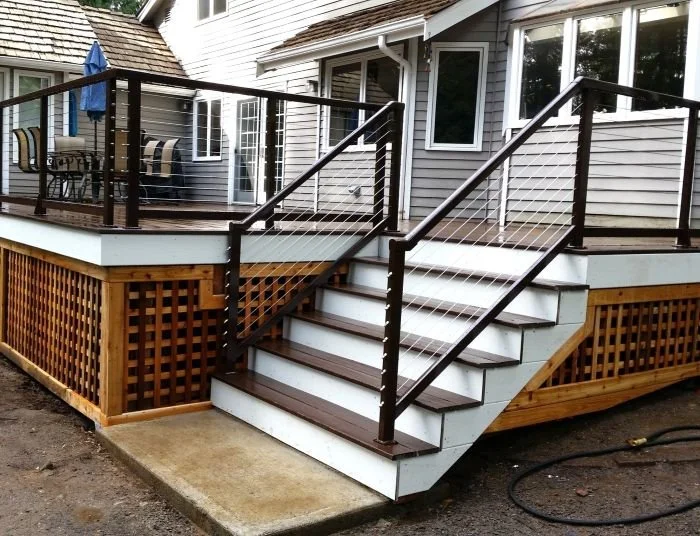
Cable railing materials use stainless steel cables paired with structural posts and top rails. They are selected for openness and sightline preservation rather than visual mass or privacy.
Key characteristics
Stainless steel cable infill
Minimal visual obstruction
High strength when properly tensioned
Cable railing systems are often evaluated alongside metal railing options, though they serve a different design purpose and are chosen primarily for view retention rather than enclosure or traditional styling.
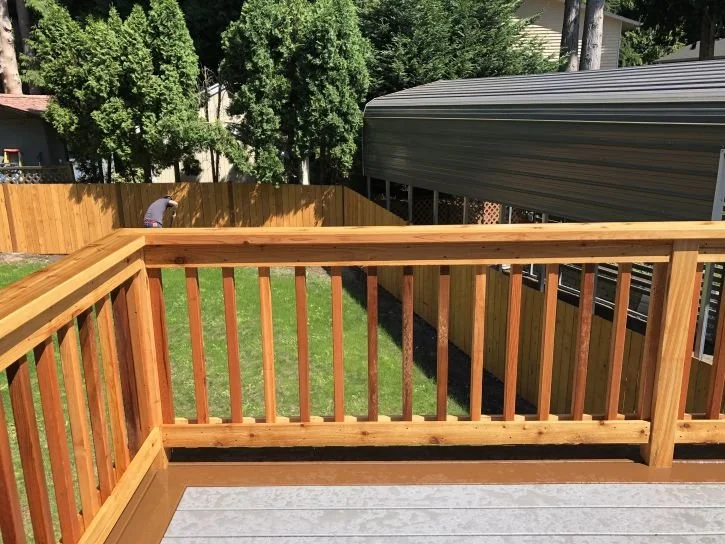
Wood Railing Materials
Wood railing materials offer a traditional appearance that matches natural decking styles. Like other wood products, they change over time and respond to weather exposure.
Key characteristics
Natural grain and texture
Customizable through finishes
Requires ongoing maintenance
Wood railings are associated with traditional deck styles and are comfortable with routine upkeep.
Where Different Railing Materials Perform Best
Railing material performance depends on visibility goals, exposure conditions, and maintenance expectations. Different materials respond differently to moisture, sunlight, and long-term wear, which is why material selection is reviewed as part of professional railing installation planning.
Reviewing completed projects can help illustrate how various railing materials perform and appear in real-world installations.
You can view completed projects in our portfolio to see how different railing materials perform and appear in real-world installations.
When Homeowners Compare Alternatives
Railing materials differ in appearance, maintenance requirements, and long-term behavior. Metal, composite, PVC, and wood each respond differently to environmental exposure and care over time.
Understanding these differences helps set expectations without assuming one option is universally better.
Maintenance Considerations
Maintenance expectations vary significantly by railing material. Synthetic materials generally focus on surface cleaning, while wood requires periodic refinishing to manage weathering.
Understanding these differences helps set realistic expectations for long-term ownership.
If you’re comparing railing materials and want help understanding how different options relate to code requirements, visual goals, and long-term use, a consultation can help review differences.