
When Deck Replacement Makes More Sense Than Repair
Many homeowners consider repairing their deck when signs of wear start to appear. While repairs can address surface-level issues, they don’t always solve underlying structural problems. In many cases, a full deck replacement is the safer and more cost-effective long-term solution.
Signs Your Deck May Need More Than Repair
A deck may look fine at first glance, but deeper issues often exist beneath the surface. Some of the most common warning signs include:
Soft or deteriorating decking boards
Unstable or uneven stairs
Loose or outdated railing systems
Moisture damage and rot in framing
Aging support posts or compromised structure
When multiple issues are present, repairs tend to be temporary fixes rather than lasting solutions.
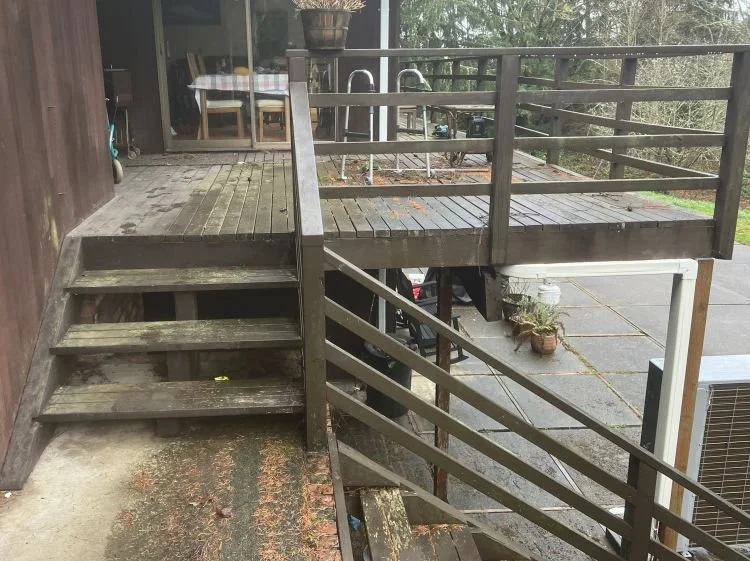
Aging deck with worn boards and unstable stairs before replacement
Why Repairs Aren’t Always Enough
Deck repairs typically focus on visible components like boards or railings. However, if the framing or structural support is compromised, replacing surface materials won’t restore safety or durability.
In these cases, repairs can:
Delay the inevitable need for replacement
Add repeated maintenance costs over time
Leave underlying safety concerns unresolved
A properly built deck requires a strong structural foundation, not just updated surface materials.
When Deck Replacement Is the Better Option
Full deck replacement becomes the better choice when:
Structural components are weakened or failing
The deck requires frequent repairs
Safety is a concern for daily use
The layout no longer meets your needs
You want a long-term, low-maintenance solution
Replacing the deck allows for proper framing, updated materials, and a design that fits how the space is actually used.
What Goes Into a Proper Deck Replacement
A full replacement involves more than just new boards. It includes rebuilding the structure from the ground up to ensure long-term performance.
Key elements include:
Proper framing and load support
Secure connections and hardware
Moisture protection and flashing
Stable stair systems and railings
Materials suited for your environment
To understand how these elements come together, visit our deck construction services page.
Before and After: Why Replacement Matters
In this project, the original deck showed signs of aging, moisture exposure, and structural wear. The stairs were uneven, and the overall structure was no longer reliable.
After replacement, the new deck included:
Reinforced framing
Updated stair system
New railing for safety
Durable materials designed for long-term use
The result is a safer, stronger, and more functional outdoor space.
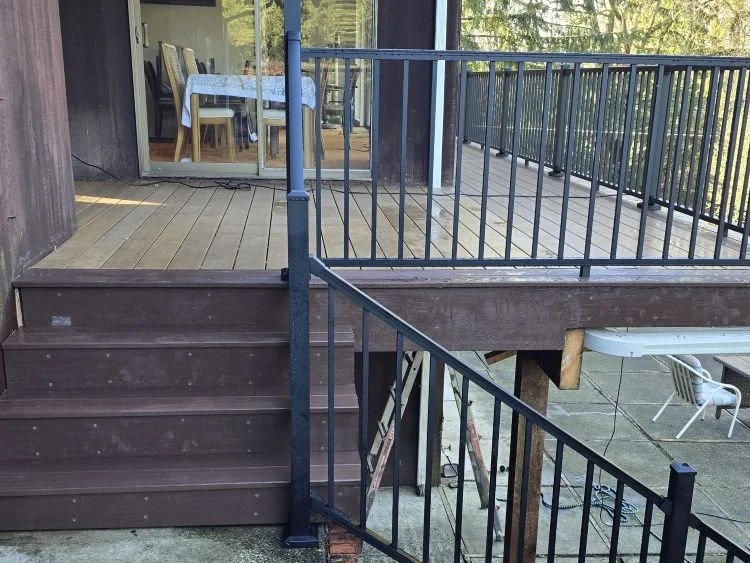
Deck replacement with composite decking, new stairs, and black railing system
Choosing the Right Materials
When replacing a deck, selecting the right materials can significantly impact long-term performance.
Options include:
Composite decking for low maintenance
PVC decking for moisture resistance
Cedar for a natural appearance
Each material has its benefits depending on your goals and environment.
Final Thoughts
While repairs can be useful for minor issues, they are not always the right long-term solution. When structural problems are present, deck replacement provides a safer, more durable, and more cost-effective outcome over time.
Thinking About Replacing Your Deck?
If your deck is showing signs of wear or requires constant repairs, it may be time to consider a full rebuild.
Explore your options for deck construction services and learn how a properly built structure can improve safety, durability, and everyday use of your outdoor space.