
How Deck Height Affects Cost, Permits, and Structural Design
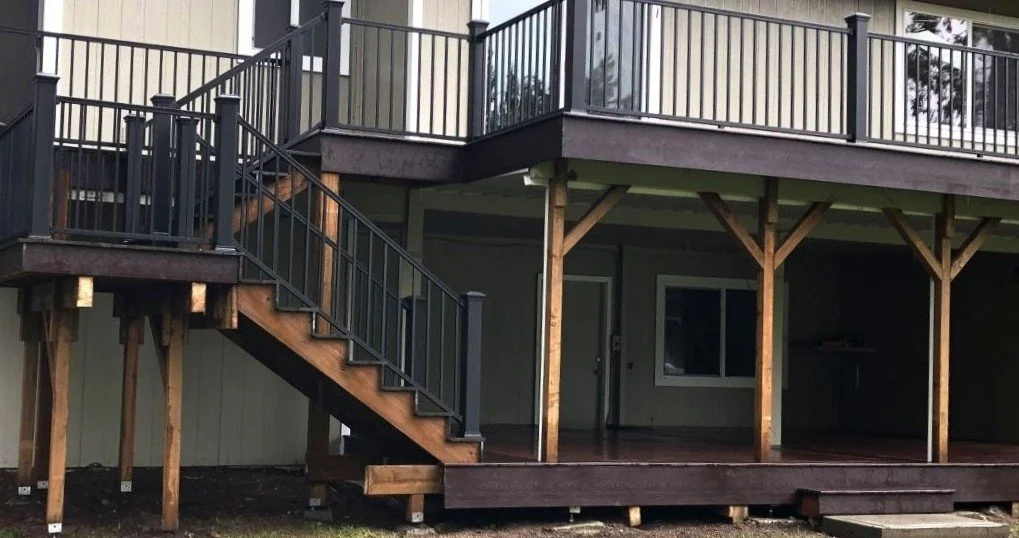
Elevated deck with stairs and structural framing
Deck height has a direct impact on cost, permitting, and how the structure needs to be built. A low, ground-level deck may require minimal structural support, while elevated decks involve more complex framing, safety considerations, and code requirements. Understanding these differences early helps homeowners plan the right scope and avoid unexpected changes later.
Why this matters
Height changes everything.
As a deck moves further off the ground, the structure must handle greater loads, increased lateral movement, and stricter safety requirements. This affects:
Framing size and spacing
Footing depth and placement
Railing and stair design
Permit and inspection requirements
What looks like a simple design choice can significantly impact both cost and construction complexity.
Low-height decks: simpler, but not always simple
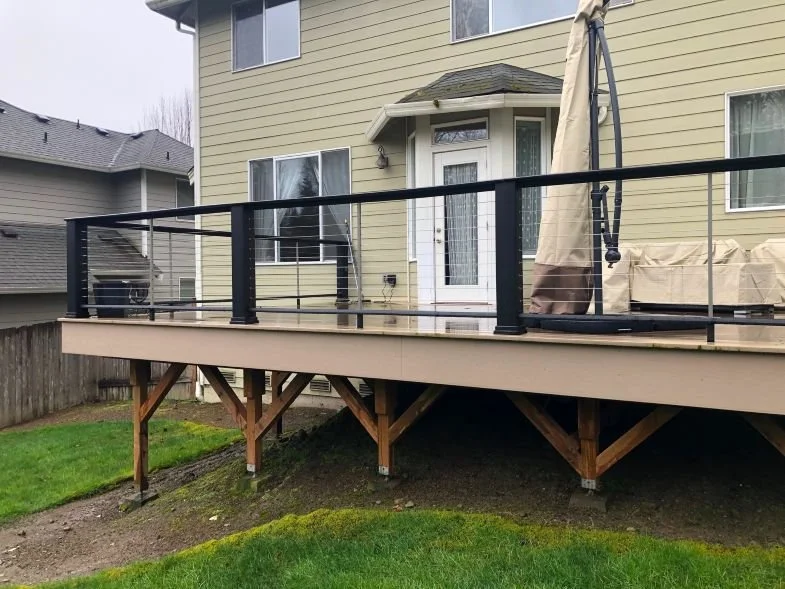
Lower decks still require proper drainage, footing placement, and structural support to prevent long-term issues.
Low decks, typically under 30 inches from grade, are often less complex but still require proper planning.
Homeowners should consider:
Ground contact and moisture exposure
Drainage and airflow beneath the deck
Proper footings even for lower structures
Long-term material durability
Even low decks can fail early if drainage and support are not handled correctly.
Elevated decks: structural planning becomes critical
As deck height increases, structural requirements become more demanding.
Elevated decks typically require:
Larger beams and joists to support load
Deeper and properly spaced footings
Secure ledger attachment to the home
Lateral bracing for stability
Engineered railing systems for safety
Higher decks are not just scaled-up versions of low decks — they are fundamentally different structures that must be built to handle movement, load, and safety risks.
For higher structures, a properly plannedfull deck replacement project ensures the framing, support system, and safety features are built to current standards.
Permit and code considerations
Deck height directly affects whether permits are required and how inspections are handled.
In Washington, elevated decks often trigger:
Full structural permitting
Framing and footing inspections
Railing height and spacing requirements
Stair geometry and safety standards
Skipping or underestimating these requirements can lead to costly corrections during or after construction.
Common mistakes homeowners make
Assuming all decks are built the same regardless of height
Underestimating the cost difference between low and elevated decks
Overlooking drainage and moisture issues on lower decks
Treating elevated decks as simple upgrades instead of structural builds
These mistakes often lead to redesigns, delays, or premature repairs.
How a professional evaluation helps
A proper evaluation considers how deck height impacts structure, safety, and long-term performance. This includes reviewing load paths, footing placement, framing design, and how the deck connects to the home.
For elevated decks especially, planning the structure correctly from the start prevents costly adjustments later and ensures the deck meets current code and safety standards.
Planning a deck replacement project in King County?
If your project involves elevation changes or a second-story deck, proper structural planning is essential before construction begins.